
5 Common Reasons for RTO in E-commerce

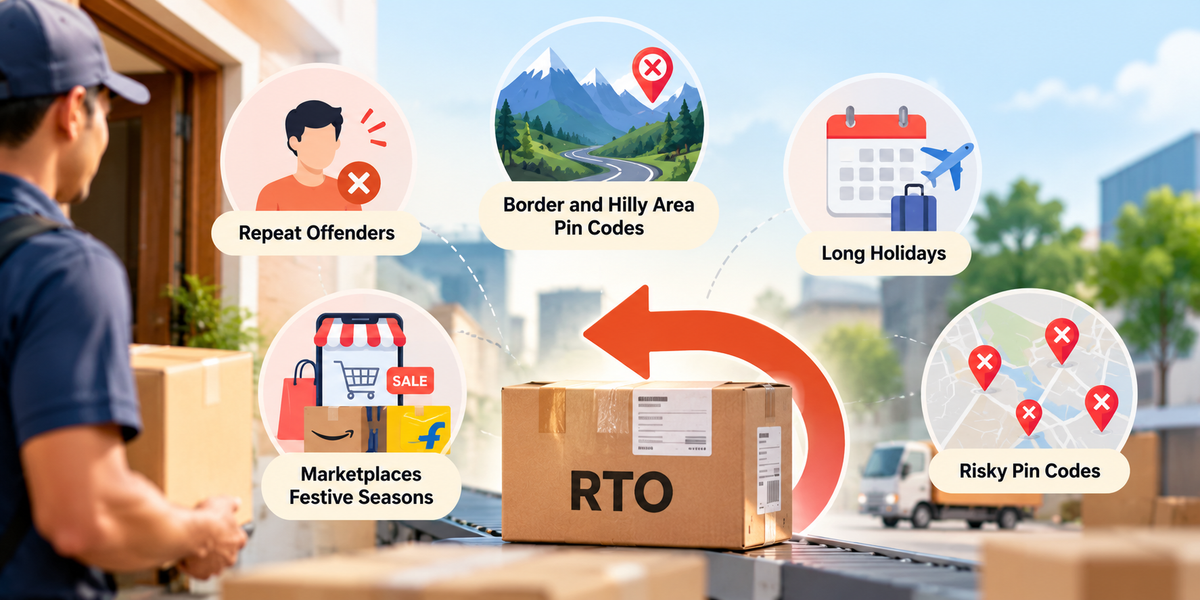
Return to Origin (RTO) is a major challenge for e-commerce businesses, increasing logistics costs and affecting profitability. While customer refusals are a common reason, several other factors can contribute to failed deliveries.
Here are five important reasons brands should monitor to reduce RTO.
1. Repeat Offenders
Some customers repeatedly refuse COD orders or remain unavailable during delivery. Identifying customers with a history of failed deliveries and verifying their orders before dispatch can help reduce repeat losses.
2. Border and Hilly-Area PIN Codes
Deliveries to border regions and hilly areas can face accessibility challenges, limited courier coverage, and longer delivery timelines. Brands should verify serviceability and check courier performance for these locations before shipping.
3. Long Holidays
Extended holidays and festive breaks can disrupt delivery schedules. Customers may travel, become unavailable, or lose interest in delayed orders. Proactive communication and accurate delivery estimates can help manage expectations.
4. Marketplace Festive Seasons
During major marketplace sales and festive events, customers may place multiple orders across different platforms. They might cancel, refuse, or deprioritise some purchases, potentially increasing RTO for certain products and customer segments.
5. Risky PIN Codes
Some PIN codes consistently record higher RTO rates because of delivery challenges, address quality, customer availability, or courier performance. Analysing location-wise data can help brands introduce targeted verification and improve courier allocation.
Conclusion
Reducing RTO starts with understanding why deliveries fail. By analysing customer history, PIN-code performance, seasonal patterns, and serviceability, e-commerce brands can make smarter shipping decisions, minimise avoidable costs, and improve delivery success rates.